Following on from our last blog on returning to exercise post natal where we discussed considerations, evidence and their time-frames. So, the question every mama wants to know – “When can I return to exercise?”. Let’s delve further into what the reconditioning process looks like.
So, WHERE DO WE BEGIN?
We strongly encourage women to come in for a postnatal assessment at approximately six weeks post-partum. This gives your body a reasonable amount of time to adjust, settle, recover and heal after pregnancy and birth. It also gives you a bit more time to get settled into the fourth trimester (as much as possible).
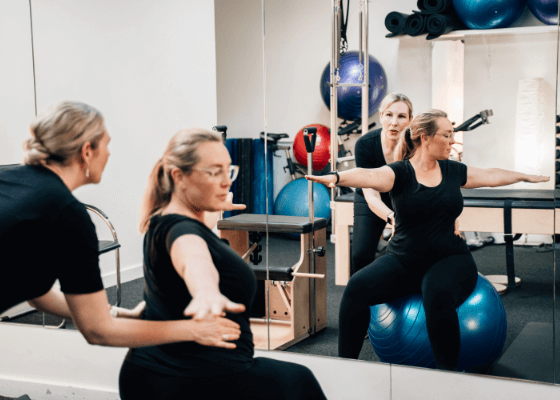
The assessment allows us to get a better understanding about YOU and all the factors, including birth history and recovery so far, as well as gauge how your muscles are activating and working now (core, pelvic floor and surrounding structures). The way abdominal muscles engage and activate is very important and can guide the rehab and treatment plan for each mama (we can see this very accurately with our diagnostic ultrasound machine, in case you’re wondering!). Post-birth, we often see mamas engaging their deep tummy muscles incorrectly—which is what we call “bearing down” or “doming”—and this can increase intra-abdominal pressure, causing your pelvic floor structures to have to work extra hard. Over prolonged periods, this can cause a whole new set of problems that we really want to avoid.
Bearing in mind, your pelvic floor muscles have just completed an ultra-marathon through pregnancy and birth, so you can imagine they’re already kind of worn out. So, the first step is generally to re-train your deep core, stabilising and pelvic floor muscles. Once we’ve nailed the “basics”, it’s time to start building strength through graded progressions, and getting mama back into the exercise she loves.
What does the reconditioning process postnatal look like and involve?
Let’s recap. We know it takes six weeks to let the body adapt and recover before we start to re-train correct muscle recruitment, then the strengthening process takes a further six-to-eight weeks (or months, in some areas!). After strengthening, we can start to increase the intensity and get more sport/activity specific depending on your goals.
You can already start to see that after a good reconditioning phase, returning to activity (depending on what it is) can really vary. Lower intensity and more supported exercise will likely take less time to return to, versus higher intensity activity and sports. It always varies from mama to mama so, while we can’t provide a specific timeframe, after an assessment we can at least offer a guide and, most importantly, set you up with a tailored and progressive return to activity program.
POSTNATAL EXERCISE AT PIVOTAL
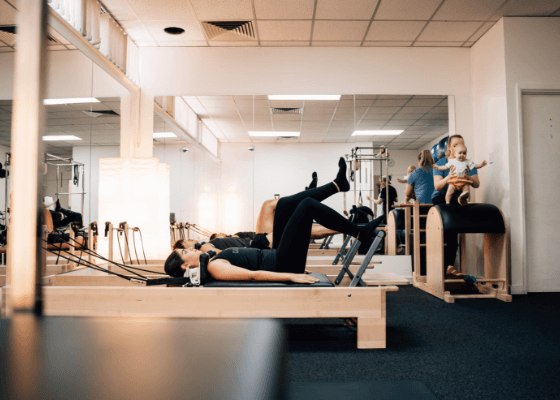
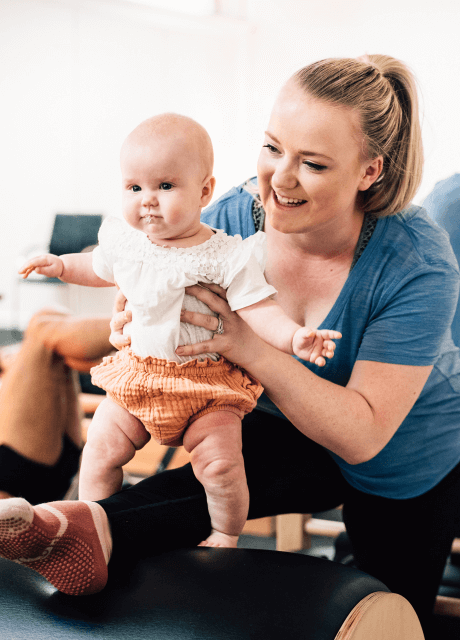
Pivotal offers many different exercise classes across the week, that are ideal for postnatal reconditioning, including our Mums & Bubs and clinical Rehab classes. Mums & Bubs incorporates movement, core + pelvic floor strength as well as whole-body re-conditioning. These classes are run by our physiotherapists and you can claim on private health as part of your rehabilitation. They are individualised, safe, fun, social and bub-friendly! #SpoilerAlert: we just love the baby cuddles.
Pop in and see us at Pivotal for a post-natal assessment, where we can discuss your goals and next steps to get you feeling like yourself again (with a cute little sidekick).
~ Sophie Alderslade, Physiotherapist