When can I return to exercise?
We recently posted a blog post on exercise during pregnancy, but what about getting back into it after you’ve given birth? A question we often get asked by new mums is “when can I get back to exercise and my pre-pregnancy body?”. Taking it easy doesn’t come so easy to everyone, so let’s look at some key points about a mama’s body (and mind) after birth.
It’s important we preface this by explaining how deeply we understand that each new mum will have a different pregnancy, birth and postpartum experience to the next, and while the physical recovery is one thing, the psychological and mental changes are a completely different ball game. That said, this blog is a very broad and generic look at the postpartum recovery, and in no way should any mama compare how she feels to the perceived expectations laid out here. For more information about your personal postpartum plan, please come and see us.
So we understand that mamas often don’t feel like themselves during early motherhood. Life before baby is a blurry, distant memory. And your body is still adapting to the significant changes it underwent during the last 40-ish weeks. Sleep? What sleep. Pains, bleeding… oh and did we mention a lack of sleep? Maybe exercise is actually the last thing on your mind. Or maybe you’re counting down to the six-week mark when your pregnancy app said you can hit the gym again, or when that pregnancy instagram page you follow said you can.
PUMP THE BREAKS (not just the boobs), MAMA
We would LOVE to say that it’s just six weeks of letting your body heal, get back to normal and that it’s the same for everyone, but it’s not quite that black and white—it’s a complete grey area. The amount of time can vary enormously from mama to mama. There are so many factors that come into play, including your pregnancy experience, birth/delivery, hormonal profile coinciding with lactation, recovery, how your muscles are activating and working now, exercise experience, type of activity and more.
We love that you’re eager to get back to exercise and to feeling more like yourself; and by all means we want to help you get there! It’s our joy and passion as women’s health physiotherapists to empower you, help you regain confidence, feel strong again and get back to doing what you love…but we want to do it safely to prevent any problems or injuries. This is the time to take extra special care of your body (as well as your baby).
It’s important to take the necessary steps to re-condition your body after the changes that occur during pregnancy and birth. Your muscles and ligaments aren’t going to be where they were 10, 11, 12 months ago, so you’re likely to be at a higher risk of injury now and in the future. It’s about rebuilding because, let’s be honest, nobody wants to jump back into the gym with a seven-week-old baby, only to suffer bladder/bowel incontinence and pelvic organ prolapse later in life. No thank you, we don’t want no LBL (light bladder leakage) over here… ladies am I right? BUT, if you are or have experienced this, know you are not alone, it’s more common that you might think, so please don’t feel embarrassed about it (more on this topic to come).
What do we know and what does the evidence say?
The generic advice isn’t completely off the mark but there’s a bit more to consider after pregnancy. We know that tissue healing and recovery takes around six weeks. Further evidence also tells us that strength changes take approximately six to eight weeks of consistent resistance training to see noticeable hypertrophy (growth). However, when it comes to abdominal fascia (where bub shacked up for a good nine months), this is shown to take closer to six or seven months to regain tensile strength.
“MUM TUM”
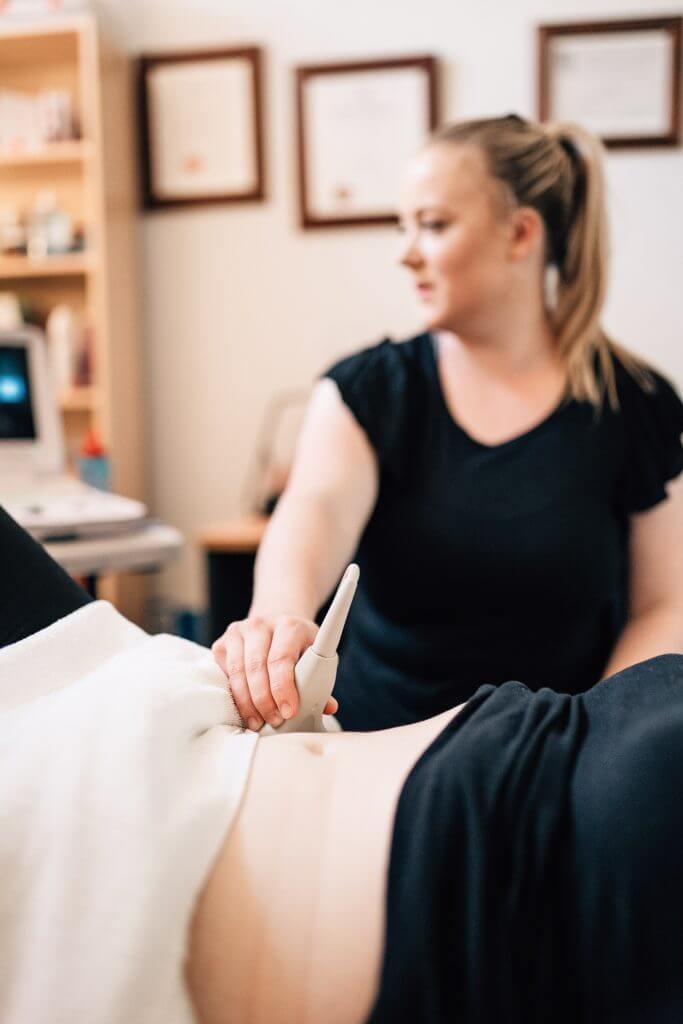
First of all, let’s ditch this language in a derogatory sense. All too often we hear women asking how to get rid of it, but let’s remember that our stomach comprises of layers and layers, covered in stretchy skin, so it doesn’t always spring back to how it was pre-pregnancy. This can be a real mental challenge (on top of everything else, right?) but it’s important to consider and respect this, so as to place reasonable expectations on your own body.
During pregnancy, mama’s stomach grows while her abdominal muscles and fascia stretch to support this. They stretch vertically, but there’s only so far they can go before they say, “hang on, I need more room”, and start to stretch horizontally as well. The degree of stretch varies among women, their pregnancies and their little babies, but this is what’s referred to as Diastasis Rectus Abdominis Muscle separation or DRAM (also referred to as RAD – Rectus abdominus diastasis). Almost every woman will experience some degree of stretching during pregnancy, however it becomes most prominent postnatally, which is why that’s when it’s assessed.
Now that’s a lot of information to digest, stay tuned for part 2 of our blog on postnatal exercise where we delve further into what the reconditioning process entails and how we get you back to that exercise you know and love safely.
~ Sophie Alderslade, Physiotherapist