
In collaboration with obstetricians, SRC Health has designed a range of garments to help women feel comfortable throughout their pregnancies, and to help new mums get back to their busy lives with a little extra support.
These aren’t your regular run of the mill maternity leggings or post-natal supports and there’s a reason they are endorsed by the Australian Physiotherapy Association (APA) and strongly recommended by women’s health professionals across Australia. Not to mention, Pivotal is a proud stockiest of the SRC range. Let us tell you why.
What is this witchcraft?!
No witchcraft, just good ol’ fashioned science and research. The SRC range is classified as medical compression devices, boasting a 4-15mmhg level of compression. Each garment underwent vigorous research, development and testing to ensure the best quality that provides adequate support and comfort without feelings of restriction.
SRC has a unique and specialised fabric that allows for stretch yet returns to its original shape after continuous wash and wear. They use “true cross” compression fabric—each layer is cut on a different plane, meaning that compression is not lost or compromised at any time during activity.
Measurement and fit
Remember, these garments are medical devices, so the sizes don’t directly correlate to Lulu and Lorna. Correct sizing is crucial, so only an SRC trained women’s’ health physiotherapist can measure and prescribe the appropriate wearable device for you at any time—during pregnancy or postpartum.
For the SRC pregnancy range, you can be measured at any point throughout your pregnancy as the waist is adjustable so will shape around you as you continue to grow. For the SRC recovery range, it’s recommended to be measured at around 36 weeks to ensure the adequate amount of compression to your body and abdominal area through your recovery.
Mum’s Hero Products—bump and beyond
SRC Health offers a huge range of medical garments (available through Pivotal) but in this blog we’ll focus on the pregnancy and recovery options.
Pregnancy
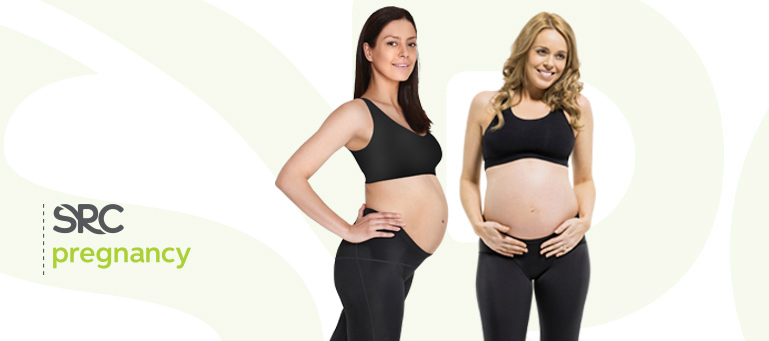
SRC’s pregnancy range garments deliver targeted compression ideal for treating conditions synonymous with growing a human—low back pain, pelvic girdle pain, sciatica, vulval and leg varicose veins. Studies have shown that 82% of women who wore SRC pregnancy garments experience a significant reduction in discomfort.
How they work
The back panel provides gentle compression to alleviate pelvic and back pain by improving muscle and tone and stability. This supports mama’s “baby carrying” pelvis by reducing the stress it would otherwise be under. As an added bonus, they even help reduce the swelling in your lower limbs.
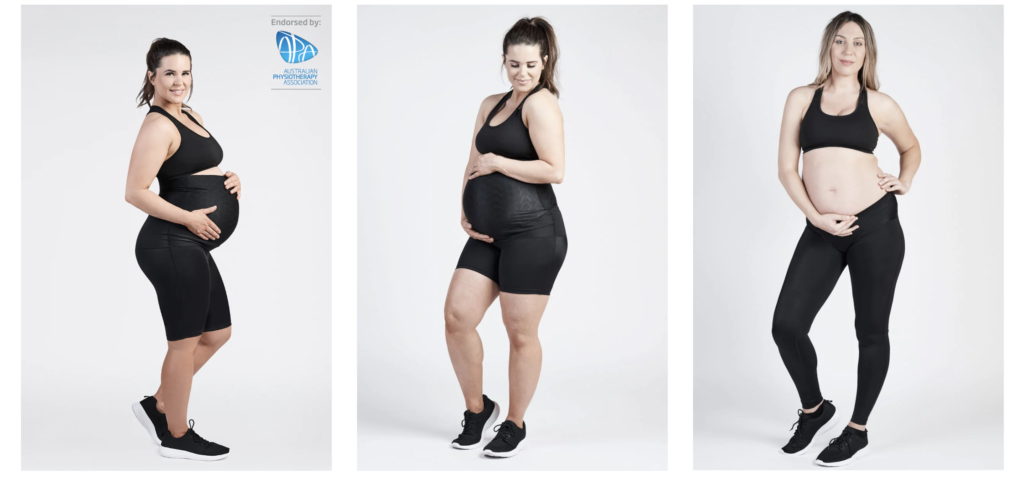
All garments are designed to be worn under regular clothes or on their own as tights/shorts; during any and all daily activities; from 12 weeks until term, over and over until your baby-making days are done.
But what do I wear?
SRC’s pregnancy range includes six options: mini shorts; regular shorts; leggings/tights—each length comes in over the bump or under the bump coverage. Which one (or more) you choose, is completely up to you!
Things to consider:
- Mamas with particularly sensitive, itchy, or hot skin might not want to cover the bump
- If more support and coverage is needed, over the bump is best
- The full-length leggings have the best venous return so will assist with swelling, varicosities, and any general leg pain, aches, or tension especially with prolonged periods on your feet. They can also be great in the cooler winter months. However, they are a little more challenging to put on.
- To wear under normal clothes, the mini shorts are the way to go, however the venous return isn’t as effective
- The regular shorts are a happy medium with some venous return, comfort under normal clothes and modest coverage as a standalone pair of shorts.
Recovery (Postpartum)

Meet the Game Changer. The SRC recovery range was designed to speed up postpartum recovery and help get mums back to feeling stronger and more mobile after pregnancy and birth.
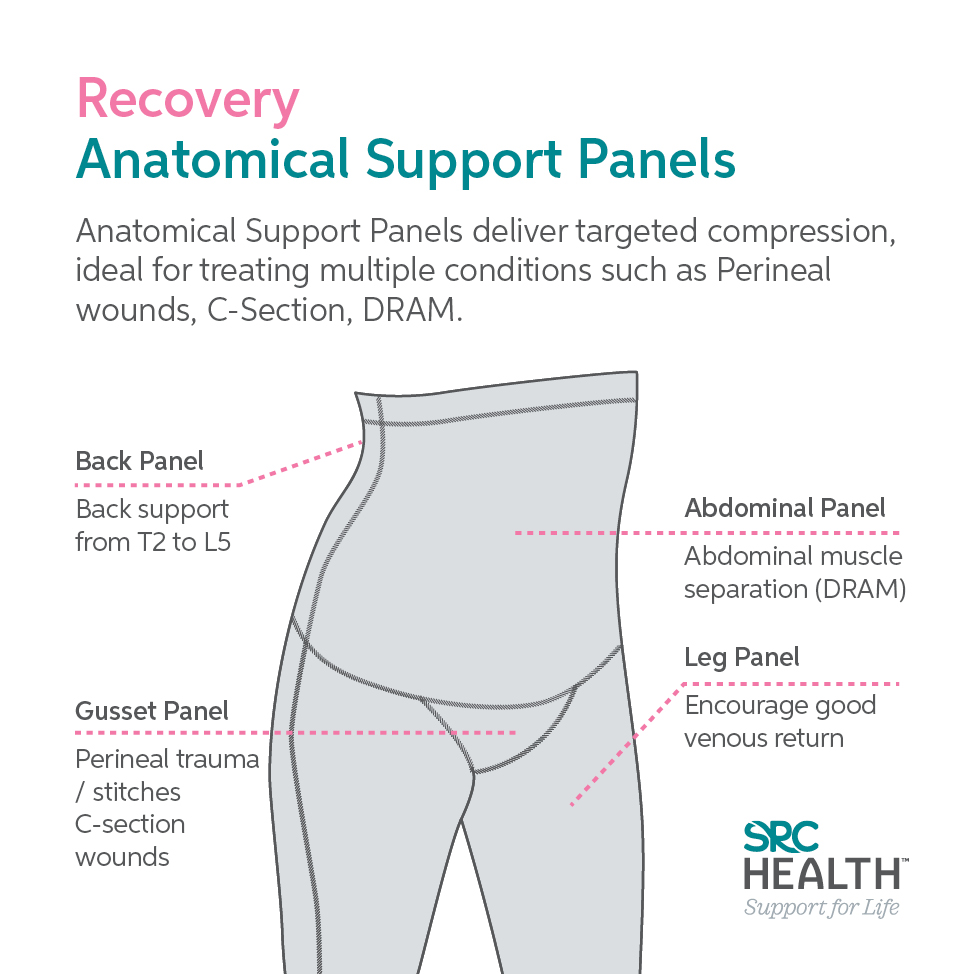
The Recovery range assists in treating abdominal muscle separation (DRAM), C-section recovery and perineal wounds. If you thought 82% was impressive, SRC’s research revealed that 97% of their customers would recommend the recovery garments to other mothers.
How they work
The SRC Recovery garments deliver graded compression, providing new mums with extra support to move more freely, making the fourth trimester just a little bit easier. They act like a second skin and can be worn the day after delivery, for as long as they provide you with support and benefit.
Bye bye bump!
With no more bump, there are just three options in the Recovery range—leggings/tights, mini shorts and regular shorts—and the choice is entirely yours.
Things to consider include: any pain to manage; any post-birth conditions; the weather/temperature; anything specific to your body/skin; but most importantly it should be guided by your women’s health professional.
Private Health Rebates
SRC products are listed with the Therapeutic Goods Administration as a class 1 medical device, so depending on your private health insurance fund and level of cover, you may be eligible to receive a rebate (we recommend checking with your fund before purchasing).
To make a claim you need to be assessed, measured and guided by your women’s health professional, who will write your rebate letter and recommendation.
Is SRC right for me?
Like everything, necessity should be assessed on a case-by-case basis. Without a rebate, RRP is around $200, and this simply isn’t within everyone’s budgets.
Yes, they are game changers, but they aren’t the only options. Before making the decision to purchase a pair, we recommend having a discussion with your women’s health professional to fully understand what your body needs and the level of expectation/cost per wear for you.
If you would like to discuss your options further or be fitted and prescribed a SRC compression garment to claim through your private health insurance, book in to see one of our physiotherapists and they’ll help guide you on the right path.
~ Sophie Alderslade, Physiotherapist