Although total hip replacements are the most successful of all the joint replacements (85% success rate), major surgery at a time in our lives when we want to enjoy travel, be more active, try different activities, and spend more time with the kids (and their kids!) is less than ideal.
Keeping our hips healthy, mobile and strong can be attributed to many aspects of our wellbeing. But these key points will play a big part in keeping you away from the operating table:
- Healthy weight – being overweight is a known contributing factor for osteoarthritis and lateral hip pain (gluteal tendinopathy, bursitis).
- Adequate nutrition – zinc, manganese, vitamin C and glucosamine can help maintain joint cartilage according to Dr Margaret Taylor, Integrative Health Doctor. Adequate protein intake is vital for improving and maintaining muscle mass.
- Bone density.
- Mechanical factors – strength, stability, mobility, balance, fitness. These are the areas where a physiotherapist can help.
This advice is based on the work of Brisbane-based PhD hip expert, Dr Alison Grimaldi, Canadian-based physio and author of The Pelvic Girdle, Diane Lee, and other expert Australian physiotherapists.
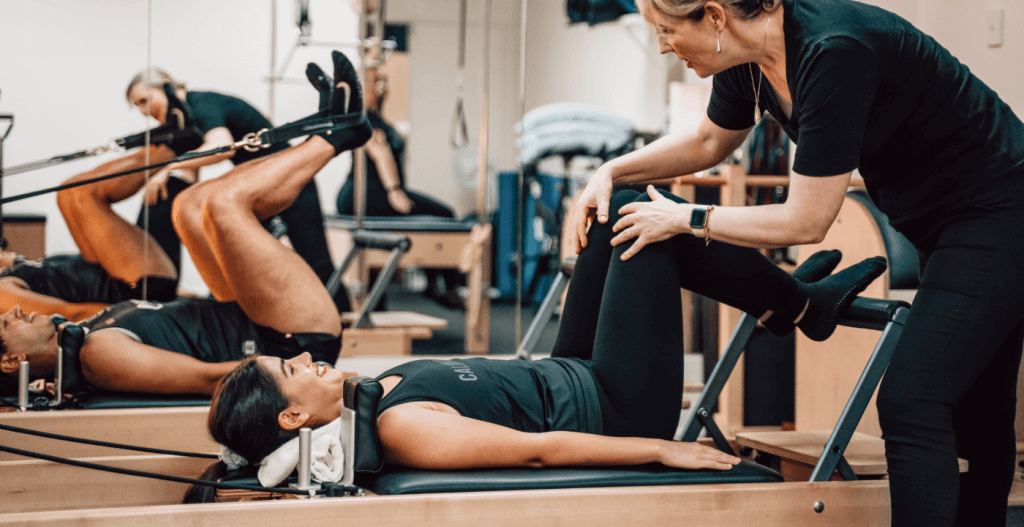
Let’s start with getting the lumbar spine and pelvis stable. Did you know that the sockets of the hips are part of the pelvis? When someone loses deep core stability, it typically creates a forward sway of the pelvis, which makes it very difficult for the gluteal muscles to control the hips. Focusing too much and too early on glute strengthening can result in the glutes pushing the ball of the hip forward, compressing the front of the hip. Diane Lee calls this “butt gripping”. The hip flexors are overloaded with the loss of core, which compresses the ball upward into the socket. This anterior/superior (up and forward) impingement of the hip can result in loss of motion, hip joint pain and hip socket and cartilage lesions. A Pilates-based program can help to stabilise and balance the lumbar spine and pelvis. A pelvic floor assessment may also be required, including the use of diagnostic ultrasound to see, in real time, exactly how the deep core muscles are engaging and activating.
Pivotal physios can assess and treat your lumbo-pelvic and hip dysfunctions to accelerate your rehab.
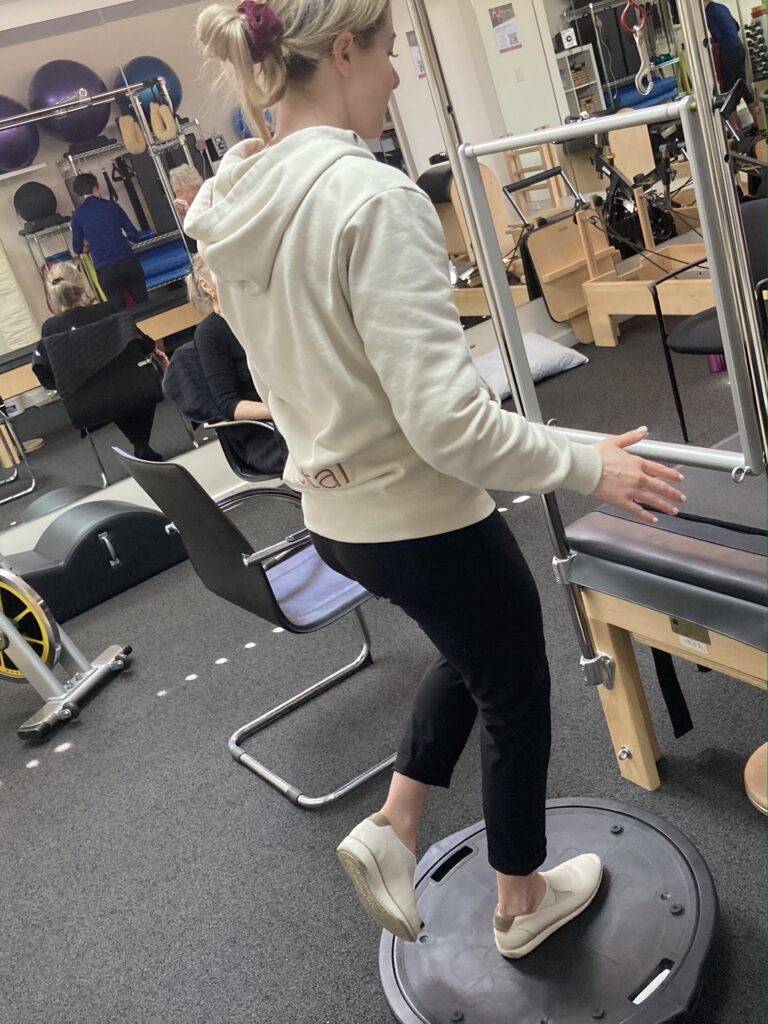
The next stage is to regain mobility and strength in the hips. Specific stretches based on your assessment can be advised by your physio and carried out during treatment or at home. This includes targeting hip extension, glutes, ITB’s, hip rotation, calves; there are countless exercises available to improve hip strength. Dr Grimaldi found in her research that functional weight bearing exercises activate the deeper parts of the gluteal muscles, and that most of our strength work is straight line. We then tend to lose lateral or sideways strength and rotational strength, which is very important for sport and even in daily life.
Band, cable, and dumbbell work can be performed to develop 3D weight bearing strength and mobility. Think squats, steps, side lunges, side steps, rotation band pulls and multidirectional steps with dumbbells. Slider machines are also a great tool to incorporate. Balance and single leg control work will do wonders and, for the more athletic, plyometric work (e.g., jump and land) are higher end goals.
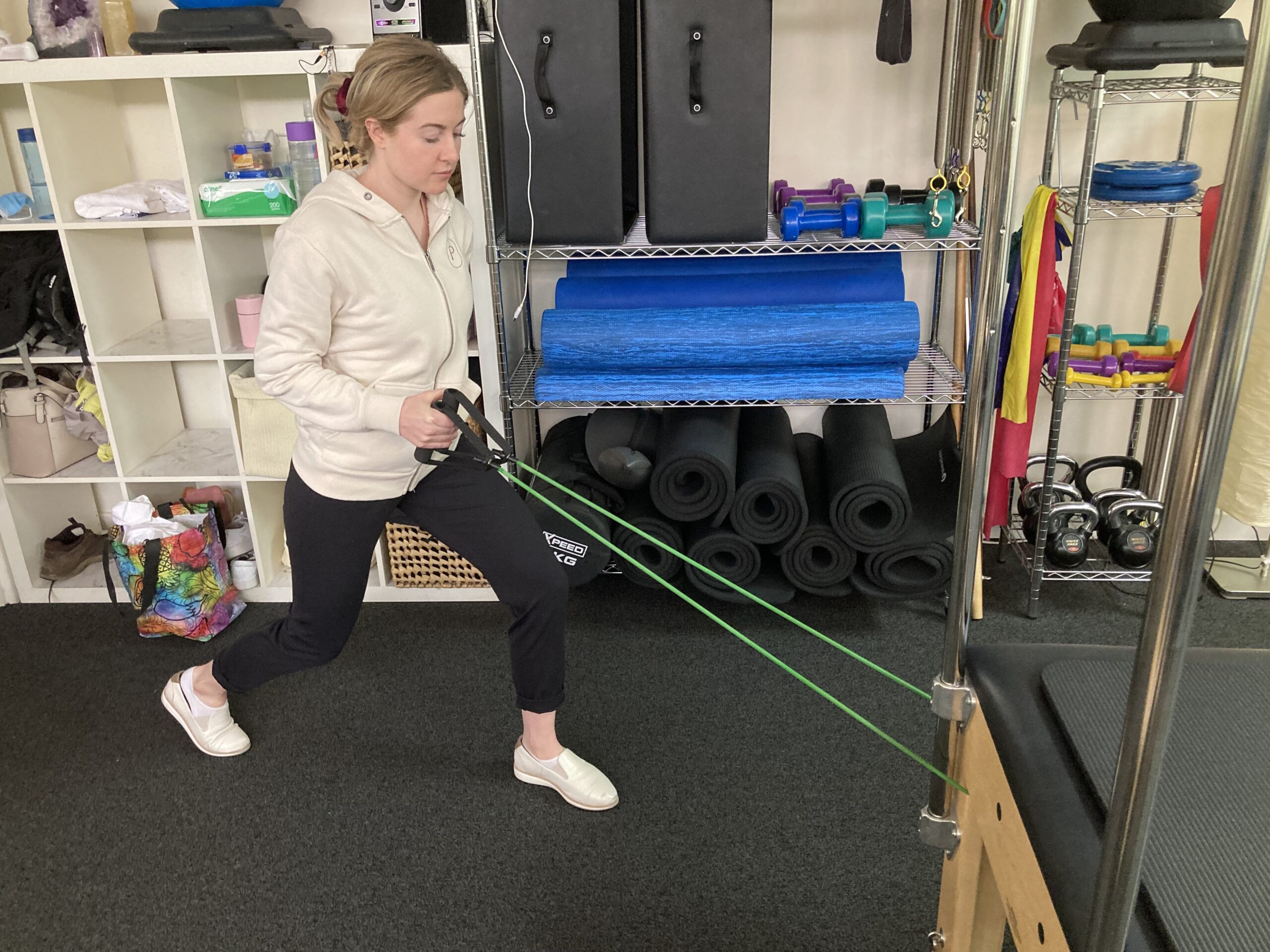
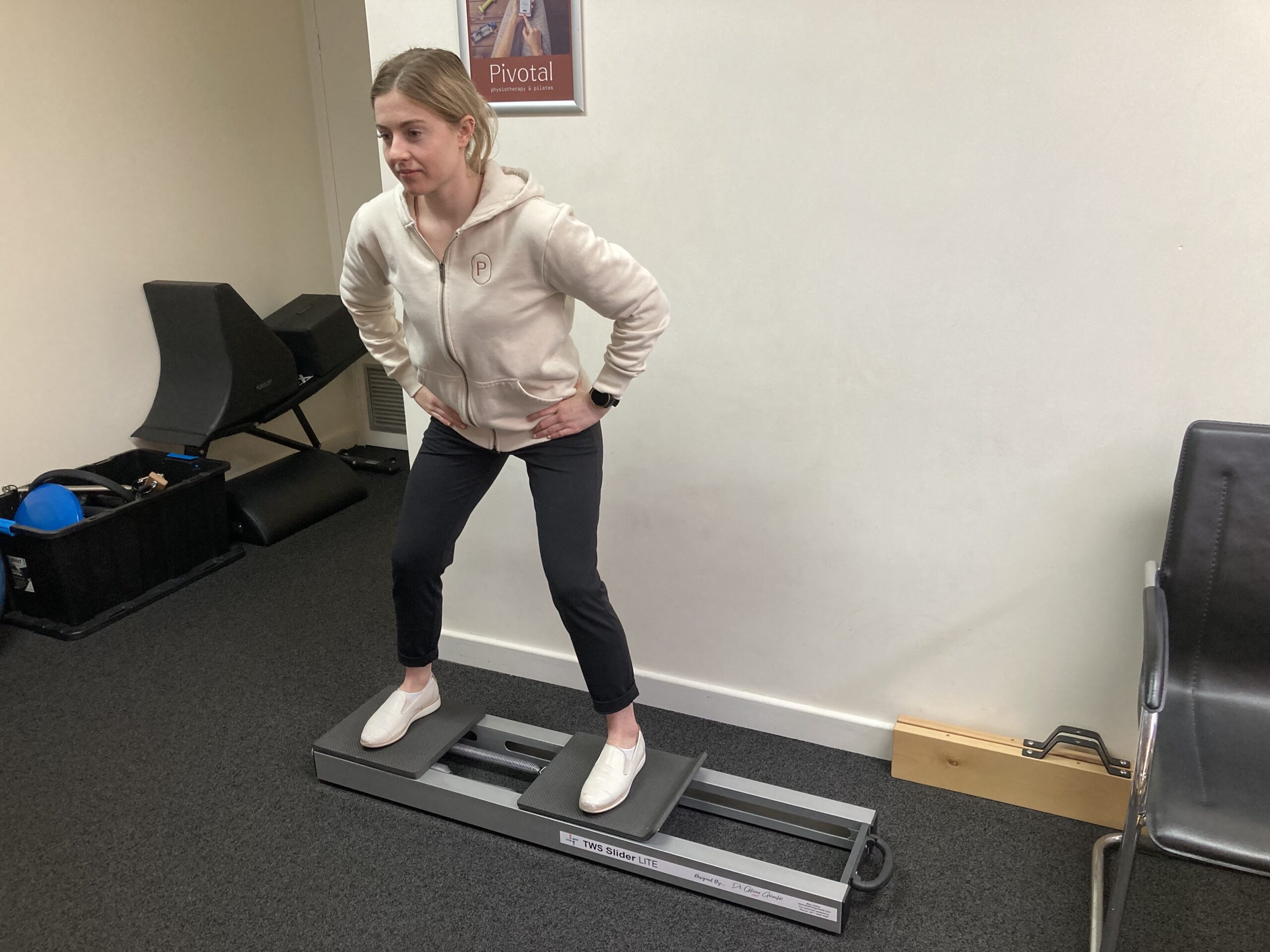
Come see us at Pivotal where we can create you a tailored strength program or come join one of our classes and let’s work towards sustaining healthy, happy hips!
~ Jim Mack, Physiotherapist